


The Good News: Australia Is Not a One-Season Destination
If you’re looking for the best time to visit Australia, there isn’t just one answer. While your timing genuinely changes the trip you’ll have, you’ve got great options in every season.
That’s actually what makes this country so interesting to plan. There’s no single “right” month to go. It truly depends which part of the country you want to explore, how you want to feel when you’re there, and what experiences you’re building the trip around.
Sydney and Tasmania can be stunning in months when northern Queensland is wet and heavy. The tropical north and the red interior around Uluru come alive in winter, while summer unlocks some of the country’s best coastal and wine-country itineraries in the south. The same calendar month tells a completely different story depending on where you are.
One thing many American travelers don’t immediately think about: Australia’s seasons run opposite to ours. Summer is December through February. Autumn is March through May. Winter is June through August. Spring is September through November. That reversal matters when you’re planning, but regional variation matters even more.
Australia is vast, roughly the size of the continental United States, and one of the most common planning mistakes is assuming one weather pattern applies across the whole country. It doesn’t.
This guide breaks it down by season so you can match your timing to the trip you actually want to take. The truth is, Australia rewards travelers who plan around seasonal strengths rather than trying to force every region into one itinerary.
Visiting Australia in Summer (December to February)
Best For: Southern cities, coastal road trips, beach time, and wine regions
Australian summer is when the southern half of the country comes fully into its own, and a trip during this time can be nothing short of electric.
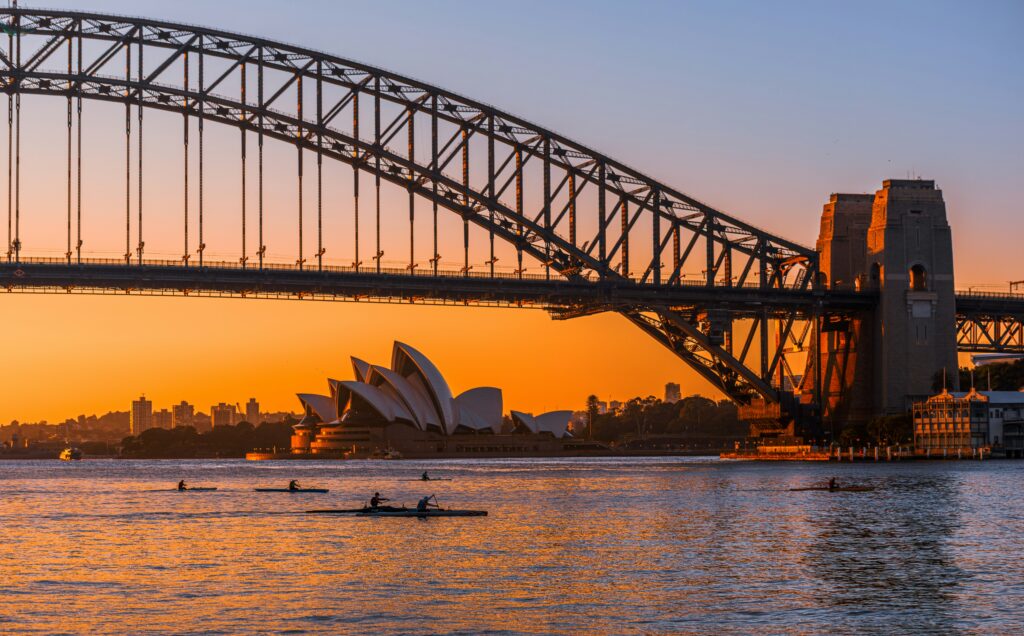
Sydney in summer is one of those experiences that’s hard to oversell. The harbor is alive, coastal walks feel effortless, and long evenings outdoors become a rhythm rather than a highlight. There’s a reason people come back to this city in December and January. It rewards you differently than it does any other time of year.
Tasmania is another destination that earns its place on a summer itinerary. Hiking conditions are at their best, the produce is extraordinary, and the scenic driving routes that define the island are fully open and deeply enjoyable. It’s one of those places where slowing down doesn’t feel like a sacrifice — it feels like the whole point.
South Australia shines in summer too. Kangaroo Island feels open and unhurried. The Adelaide Hills are producing some of their best. The long daylight hours make it easy to move between city and countryside without ever feeling rushed.
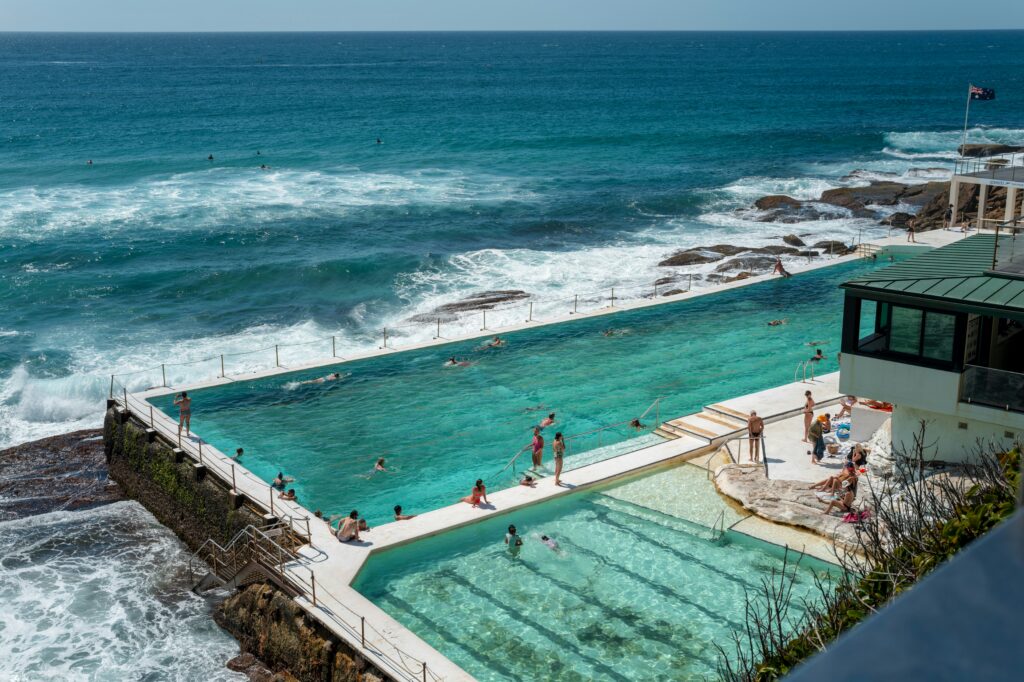
For travelers who want a trip built around water, summer delivers some of Australia’s most iconic experiences: swimming at Bondi, taking the ferry to Manly, exploring the beaches of the Mornington Peninsula, or spending time along Western Australia’s coast near Perth. These aren’t just activities. They’re the moments you’ll still be talking about ten years later.
But summer is not ideal everywhere.
Northern Queensland and much of the tropical north enter the wet season during these months, which means heavier humidity, afternoon storms, and occasional disruptions to national parks or reef excursions. It’s also cyclone season along parts of the northeastern coast.
For first-time visitors, a trip to Australia during its summer often works best when the itinerary stays focused on the south, rather than trying to cover too much of the country.
Best places to visit in Australia in summer: Sydney, Tasmania, Kangaroo Island, Adelaide Hills, Perth
Visiting Australia in Autumn (March to May)
Best for: Wine regions, city-and-countryside combinations, comfortable temperatures, and shoulder-season travel
Autumn is the most underrated time to visit Australia. The heat steps back, the crowds thin out, and what’s left is a version of the country that feels a little more like it belongs to you. Days are warm, evenings carry a welcome coolness, and the pace of travel just feels easier.
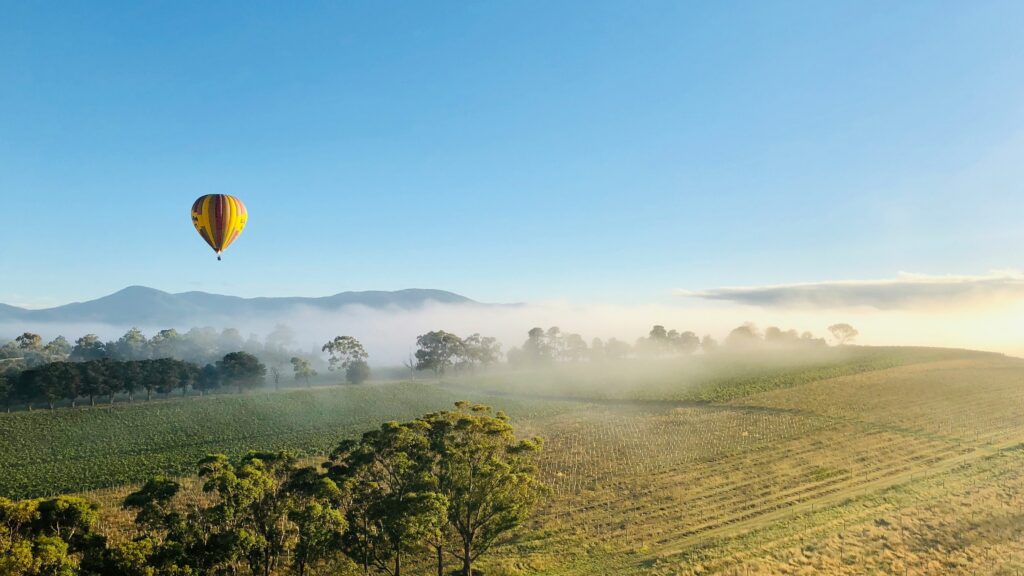
This is when Melbourne earns its reputation. The city has an energy in autumn that pairs beautifully with everything around it. Head out toward the Mornington Peninsula for coastal scenery and some of Victoria’s best wineries, or north to the Yarra Valley, where autumn adds color to the vineyards and a more relaxed pace to the tasting experience. It’s the kind of trip where you can move easily between city energy and countryside calm without sacrificing either.
South Australia belongs in this conversation too. Adelaide is one of Australia’s most underappreciated cities, and autumn is an ideal time to explore it alongside the Barossa Valley or McLaren Vale, when harvest season brings the wine regions to life in a way that’s genuinely hard to replicate at any other time of year.
Tasmania also rewards autumn visitors, especially in late March and April. The light changes, the landscapes sharpen, and the island feels a little wilder and more intimate than it does in peak summer.
Further north, the season tells a different story. Conditions begin improving across tropical Queensland toward the end of autumn, and May is often one of the smartest times for travelers who want to beat the winter crowds while still catching favorable weather.
Best Places to Visit in Australia in Autumn: Melbourne, Yarra Valley, Mornington Peninsula, Adelaide, Barossa Valley, McLaren Vale, Tasmania
Visiting Australia in Winter (June to August)
Best for: The tropical north, the Red Centre, reef experiences, and travelers who want dry, clear conditions
Winter is one of the smartest times to visit Australia, and it’s when I planned my own trip. It’s also the season I typically recommend when Uluru and the Great Barrier Reef are top priorities for a client’s trip.
While the southern cities cool down and settle into a quieter rhythm, the northern half of the country transforms. The humidity lifts, the skies open up, and regions that can feel genuinely challenging in summer suddenly become some of the most rewarding places in the country to explore. This is the season Australia’s north was made for.
Darwin, Kakadu, and Katherine come alive in the dry season in a way that’s hard to fully appreciate until you’re there. National parks are accessible, waterfalls are flowing, and the landscapes feel vast and unhurried. Kakadu in particular is one of those places that asks something of you, a little patience and a willingness to go slowly, but gives back something that stays with you long after the trip ends.
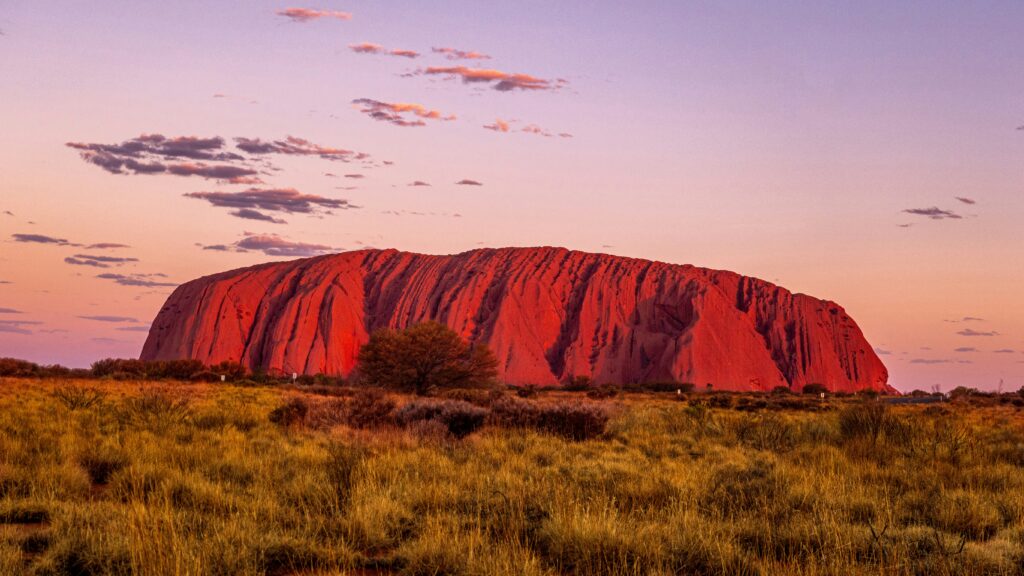
Further into the Northern Territory, winter is simply the best time to experience Uluru and Kata Tjuta. Days are warm enough for hiking, and mornings carry a welcome crispness. The light in the Red Centre at sunrise and sunset has a quality that photographs can’t fully capture. It’s one of those landscapes that becomes even more powerful when the conditions invite you to stay outside and absorb it fully, rather than retreat from the heat.
Tropical Queensland also earns its place on a winter itinerary. The Great Barrier Reef is often at its clearest during these months, visibility is exceptional, and islands like Lizard Island or Hamilton Island offer reef access without summer’s humidity and storm risk. If a reef experience is central to your trip, this is the window I’d recommend most strongly.
Winter is also the best time to visit Australia if you want to experience one of its least expected contrasts. Skiing, snowboarding, and snow-covered mountain villages exist in Australia’s alpine regions, across Victoria and New South Wales. It’s a side of the country that surprises almost everyone who discovers it.
What I love most about a well-planned winter itinerary is how much contrast it can hold. You might begin in the red desert, move north through ancient wetlands and dramatic gorges, then finish on an island surrounded by some of the clearest water on earth. That kind of range, in a single trip, is something very few destinations can offer.
Best Places to Visit in Australia in Winter: Uluru, Darwin, Kakadu, Katherine, Lizard Island, Hamilton Island, The Australian Alps
Visiting Australia in Spring (September to November)
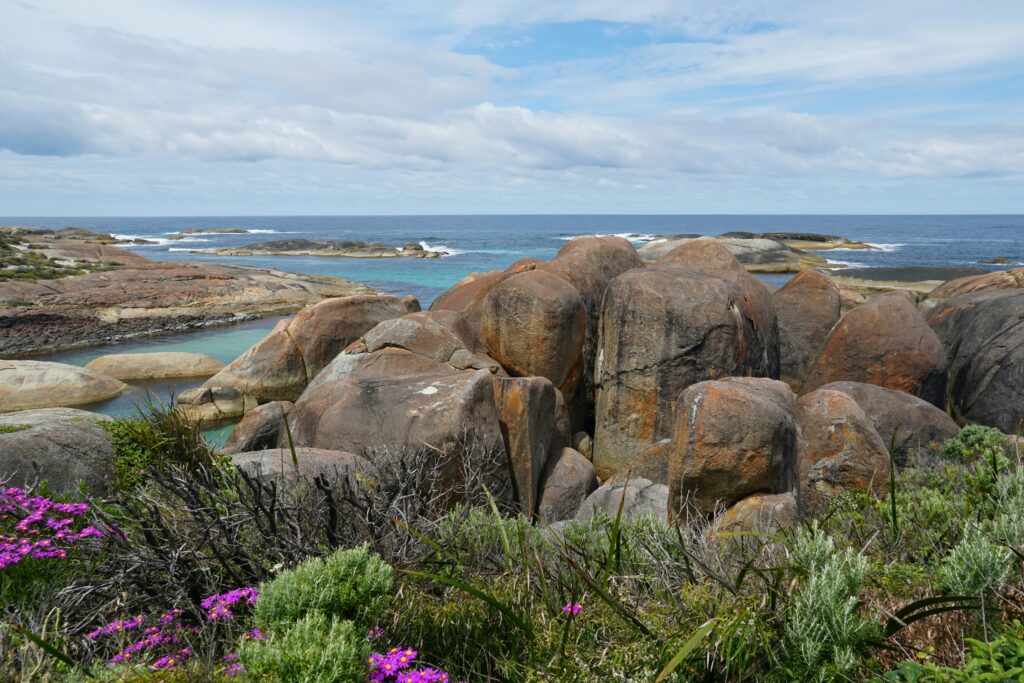
Best for: Balanced itineraries, wildflowers, coastal cities, and first-time visits across multiple regions
If I had to choose the best time to visit Australia for first-timers, it would be spring.
By spring, much of the country begins to align in a way that other seasons don’t always allow. Southern cities are comfortable. The tropical north is settling back into its best conditions, and the relentless heat of summer hasn’t yet arrived. More of Australia becomes available to you at once. That opens up itinerary combinations that can feel hard to pull off at other times of year.
Spring is the best time to visit Western Australia. Wildflower season transforms the landscape beyond Perth in ways that catch even seasoned travelers off guard. Entire stretches of countryside shift color, and the scale of it is something you have to see to fully understand. South of the city, Margaret River offers one of the country’s most satisfying combinations: dramatic coastline, serious wine country, and a pace that actually lets you settle in rather than rush through.
Perth itself is easy to love in spring. The days are warm without being punishing, and the beaches start calling again. The coastal towns just outside the city make for the kind of unhurried day trips that end up being a trip highlight.
Sydney also belongs on a spring itinerary, particularly for first-time visitors. The city feels bright and alive without summer’s full intensity, and coastal walks slip back into daily rhythm. The regions around Sydney, like the Blue Mountains and the Hunter Valley, fit naturally into an itinerary without requiring a big detour.
For reef travelers, late spring is worth serious consideration. Conditions are improving steadily through October and into November. Marine life is active, and you’re ahead of the weather patterns that make timing less reliable heading toward summer. It’s a strong window for anyone who wants reef access without committing to a full winter trip.
Spring is the season that surprises my clients the most. They come in expecting a convenient season and leave having had one of the most varied, most alive trips they’ve ever taken. That’s not an accident. It’s what happens when a destination this large finally starts working with you instead of around you.
Best Places to Visit in Australia in Spring: Perth, Margaret River, Sydney, Blue Mountains, Hunter Valley, Adelaide, Kangaroo Island
So, When Is The Best Time to Visit Australia?
The honest answer is that Australia rarely rewards trying to do everything at once.
A strong Australia itinerary works because it leans into what a particular season does well, rather than trying to outrun what it doesn’t. Summer belongs to the south. Winter opens up the tropical north and the Red Centre. Autumn and spring create some of the most natural opportunities to combine cities, wine regions, and landscapes without weather becoming the main story.
That’s why timing and route are decisions that belong together. They’re not two separate questions. They’re the same question asked two different ways. A trip built around Sydney, Tasmania, and South Australia asks something very different of the calendar than one centered on Uluru, Kakadu, and the Great Barrier Reef. Both can be extraordinary. Just not always at the same time of year.
The travelers who enjoy Australia most are usually the ones who stop trying to see the country and start thinking about which version of it they want most right now. Because this is a destination you can return to and experience completely differently each time. That’s not a limitation. That’s actually the invitation.
Ready to Start Planning Your Australia Trip?
If you’re still working out when to visit Australia, the answer usually gets clearer once you know what you want the trip to feel like and which experiences matter most to you. The regions and timing tend to follow naturally from there.
It also works the other way. If your dates are already set, I’ll work with what you have and build something that makes the most of the season you’re traveling in. There’s almost always a beautiful version of Australia available to you. The work is knowing how to find it.
That’s what I do with every client, whether we’re starting with a dream or starting with a departure date.
If Australia is on your horizon, I’d love to help you find your version of it. Reach out here.
Frequently Asked Questions About Timing A Visit to Australia
There isn’t a single best month to visit Australia because the seasons affect each region so differently. That said, September, October, March, and May tend to offer the most flexibility for travelers who want to combine multiple regions. If your trip is focused on the tropical north or the Red Centre, the winter months are hard to beat.
Spring is often where I point first-time visitors to Australia. More of the country is working in your favor at once. It’s easier to build a trip that moves between highlights without extreme weather shaping every decision. That said, the right itinerary still depends on which regions matter most to you, and that’s worth deciding before you book.
It depends entirely on where you’re going, which is one reason Australia rewards careful planning. The tropical north, including northern Queensland and much of coastal Australia, can be genuinely challenging in summer due to humidity, storms, and cyclone risk. Those same months, however, are some of the best for Sydney, Tasmania, and the southern regions.
They’re better for entirely different trips. Summer is when Sydney, Tasmania, South Australia, and the southern coastline are at their best. Winter is when the Red Centre, Darwin, Kakadu, and the Great Barrier Reef come into their own. The better question is which version of Australia you want most.
Australia rewards longer trips. Distances are significant, and moving between regions takes real time. For most of my clients, 10 to 14 days lets them explore two regions well without the trip feeling rushed. If you have more time, I’d love to help you build an itinerary that fills it well.


Be the first to comment