


The best places to visit in France aren’t universal, and they extend far beyond Paris.
While the City of Light is magnificent, France feels remarkably different from one region to the next. The best region for you to visit depends on how you travel. What energizes you. What restores you. Whether you prefer to move quickly through a destination or settle in and stay awhile.
This guide isn’t organized by popularity. It’s organized by travel style. Because choosing where to go in France should come down to alignment, not rankings.
Whether you’re drawn to mountain air, culinary depth, WWII history, lavender-scented villages, festive Christmas markets, or the sunny coast, here’s how to decide where in France to go next.
How to Choose the Best Places to Visit in France for Your Travel Style
Before choosing your France destinations, it helps to get honest about what you want this particular trip to deliver.
- Do you want to stay active or slow your pace?
- Are you traveling for food and wine specifically, or are other things more important?
- Does history anchor your travel experiences?
- Are you craving coastal scenery or mountain air?
- What do you truly enjoy?
France rewards specificity. When you match your travel style to the right destinations, the entire trip feels more enjoyable and far more memorable.
Best Places in France For the Active Traveler
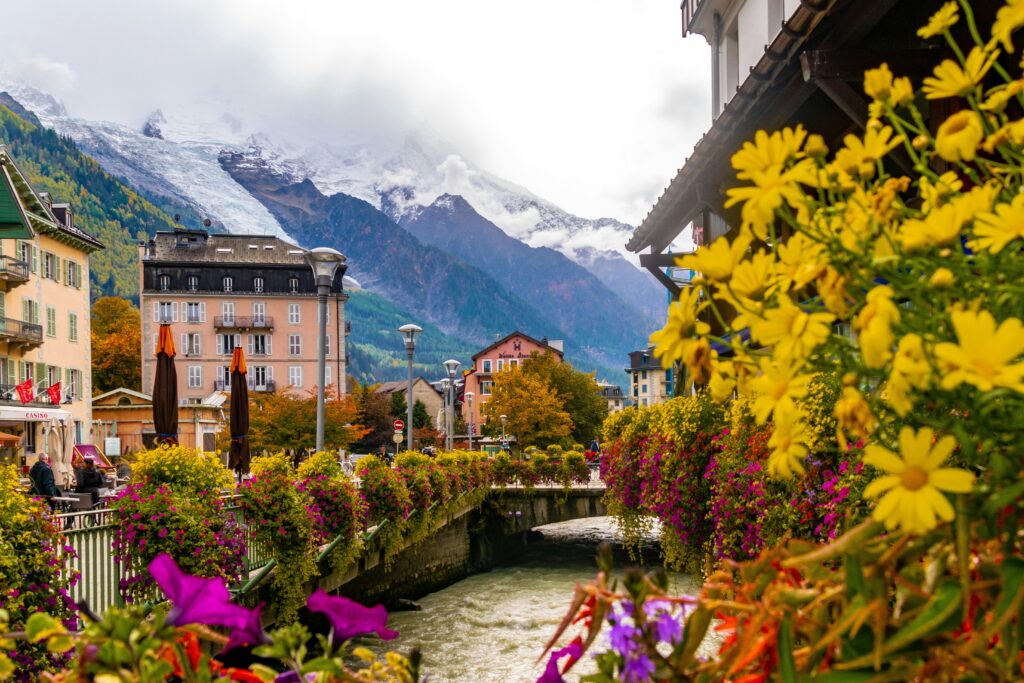
CHAMONIX
Best for: Hikers, skiers, and travelers who feel most alive outdoors
Region: French Alps
If your idea of a great trip involves waking up early, lacing up your boots, and spending the day moving through extraordinary scenery, Chamonix belongs near the top of your list.
Nestled at the foot of Mont Blanc in the French Alps, Chamonix is one of Europe’s premier mountain destinations. In summer, the trails are world-class. You can trek through glacial valleys, hike above the snowline, or take on sections of the legendary Tour du Mont Blanc. In winter, it becomes one of the continent’s most celebrated ski destinations, with terrain that challenges even experienced skiers.
Even if you’re not chasing extreme adventure, the setting alone is powerful. The scale of the mountains shifts your perspective.
Don’t miss: The Aiguille du Midi cable car for sweeping views of Mont Blanc and the Alps stretching into Switzerland and Italy.
ANNECY
Best For: Cyclists, hikers, lake swimmers, and travelers who want alpine scenery without high-altitude intensity
Region: Auvergne-Rhône-Alpes
Annecy offers many of the same alpine views as Chamonix, but with a softer edge.
Set along the shores of Lake Annecy and framed by surrounding mountains, the town feels both storybook and accessible. Canals and pastel buildings make Annecy visually charming, but the real draw is the balance between water and mountains.
Lake Annecy is known for its remarkably clear water. In summer, you can swim, paddleboard, kayak, or take a small boat out onto the lake. A dedicated cycling path loops around much of the shoreline, making it one of the most enjoyable cycling routes in France. It’s scenic, manageable, and well-maintained.
Hiking is abundant, but less extreme than the high-altitude terrain around Mont Blanc. Trails lead to panoramic viewpoints above the lake, with options that suit both casual walkers and more ambitious hikers.
Don’t miss: Taking a sunset cruise across the water to see the mountains shift color in the evening light.
Best Places in France For Foodies and Wine Travelers
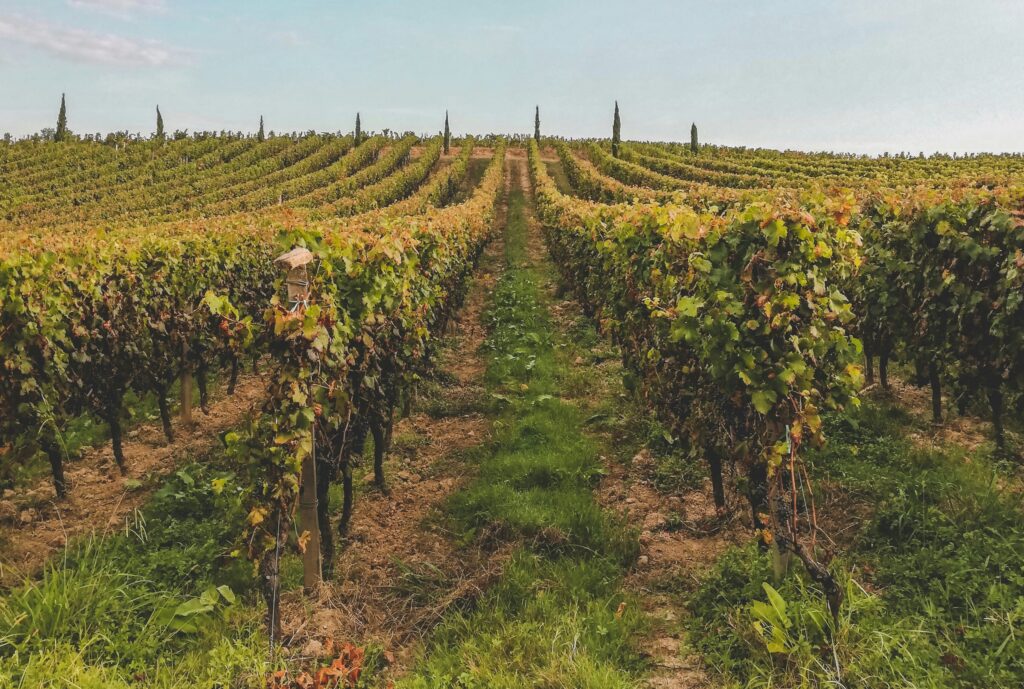
LYON
Best for: Culinary travelers and wine enthusiasts
Region: Auvergne-Rhône-Alpes
If you’re searching for the best places in France for food lovers, Lyon consistently rises to the top.
Widely considered the culinary capital of France, Lyon’s food culture is rooted in tradition, craftsmanship, and genuine pride. It’s the birthplace of the bouchon — small, family-run restaurants serving deeply regional dishes passed down for generations. It’s also home to an extraordinary concentration of Michelin-starred restaurants.
But what makes Lyon special isn’t just excellence. It’s how lived-in the food culture feels. Long lunches are respected. Markets are woven into daily life. Meals are events.
Lyon is also ideally positioned for wine exploration, with Beaujolais and the northern Rhône Valley just outside the city, which makes it one of the best places in France for wine-focused travelers.
Don’t miss: Les Halles Paul Bocuse. Arrive hungry.
BORDEAUX
Best for: Structured wine exploration and refined city atmosphere
Region: Southwestern France
Bordeaux is both a city and a wine region, and the duality is part of its appeal.
The city itself is architecturally cohesive and easy to navigate on foot. Grand boulevards, classical facades, and the reflective water mirror at Place de la Bourse give it a sense of understated polish. It feels elegant without feeling staged.
But most travelers come for the vineyards.
From the Left Bank’s Cabernet-driven blends in Médoc to the Right Bank’s Merlot-dominant wines in Saint-Émilion and Pomerol, Bordeaux offers a structured way to understand terroir. Château visits here often include guided walks through barrel rooms, explanations of classification systems, and side-by-side tastings that reveal subtle differences in soil and climate.
For wine-focused travelers, it’s one of the best places to visit in France for depth. You won’t just sip wine. You’ll understand it.
Don’t miss: A full-day private wine tour dividing time between the Left and Right Bank to compare styles.
Best Places in France For Slow Travel and The Countryside
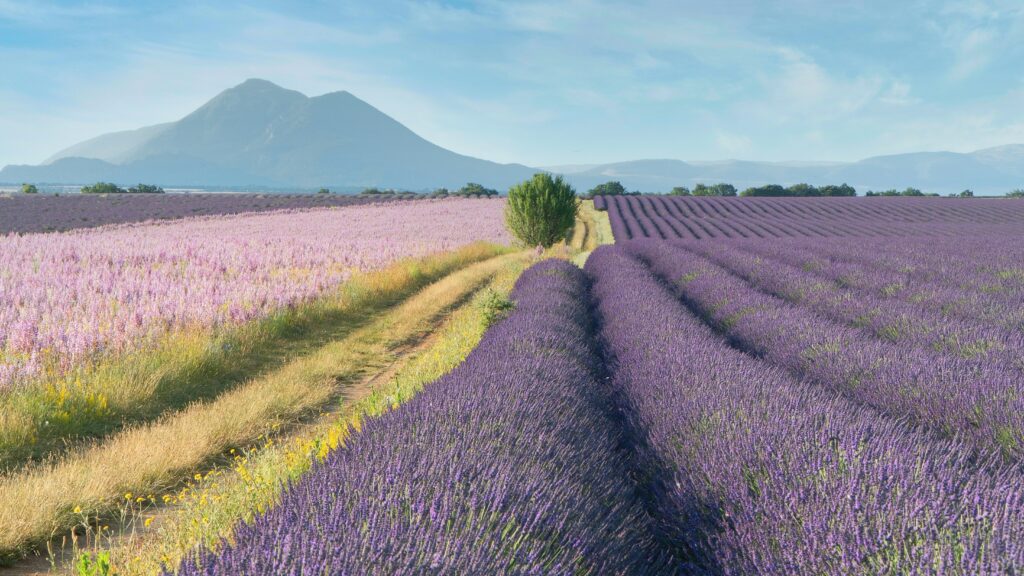
PROVENCE
Best for: Art lovers, countryside seekers, honeymooners hoping to unwind
Region: Southern France
For many travelers, Provence is one of the best places to visit in France to slow down without feeling idle.
This is a region built for lingering. Mornings start at open-air markets in towns like Aix-en-Provence or Lourmarin, where you can assemble lunch from local cheeses, olives, and just-baked bread. Afternoons might mean driving winding roads through the Luberon hill towns — Gordes, Roussillon, Bonnieux — each with its own rhythm and viewpoint. Evenings stretch long over rosé and grilled seafood as the light softens across the countryside.
The best time of year to visit Provence depends on what you’re hoping for. Late June and July bring lavender fields into bloom. September and early October deliver harvest season energy in the vineyards. Spring offers quieter villages and mild temperatures ideal for walking and cycling.
Provence is one of the best places in France for rosé lovers, and for travelers who want wine woven naturally into daily life rather than structured tastings.
Don’t miss: A private vineyard visit in the Luberon or near Châteauneuf-du-Pape, paired with a chef-led lunch that highlights regional olive oil, herbs, and produce.
THE LOIRE VALLEY
Best for: Architecture lovers and gently paced exploration
Region: Central France
The Loire Valley is the softer, more pastoral side of France.
Known for its Renaissance châteaux, this area feels expansive and peaceful. Castles like Château de Chambord and Château de Chenonceau showcase different architectural visions, one grand and imposing, the other elegant and river-spanning.
But the Loire Valley experience isn’t limited to touring historic castles.
The Loire Valley is ideal for cycling between villages, stopping at smaller wine estates, and picnicking along the riverbanks. The terrain is relatively gentle, making it accessible for travelers who want activity without intensity.
For families, couples, and travelers looking for layered history without the emotional weight of Normandy, it’s one of the best regions in France to settle into a slower rhythm.
Don’t miss: Biking between Amboise and Chenonceau with vineyard stops along the way.
Best Places in France For History Buffs
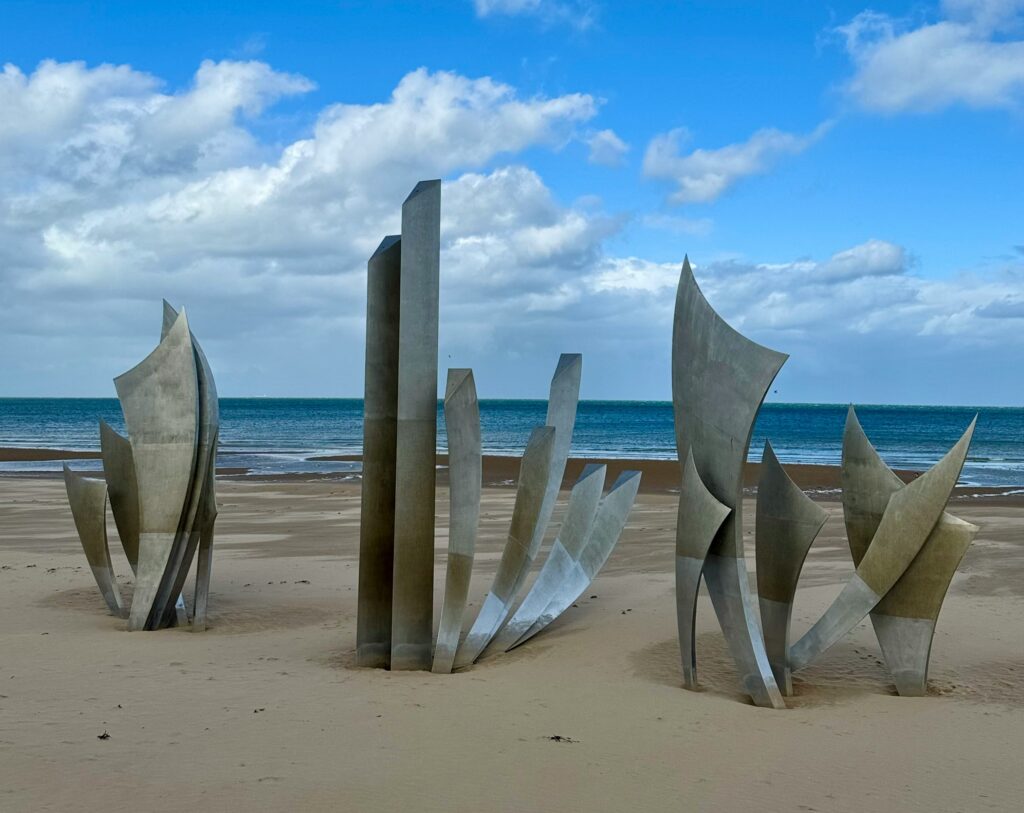
NORMANDY
Best for: WWII history, medieval towns, and meaningful travel
Region: Northern France
If you’re looking for one of the best places to visit in France for history, look no further than Normandy.
The D-Day landing beaches, the American cemetery above Omaha Beach, and the memorial museums carry a gravity that is difficult to articulate until you’re standing there yourself. The emotional weight of Normandy is part of what makes it so powerful.
Beyond WWII history, the region offers dramatic coastline, charming harbor towns like Honfleur, and one of the most iconic landmarks in the country, Mont-Saint-Michel, rising from the tidal flats.
Normandy rewards travelers who are willing to slow down and absorb what they’re experiencing.
Don’t miss: Exploring Omaha Beach with a private historian-guide who can contextualize what happened there.
Best Places in France For Nature & Coastal Travelers
CORSICA
Best for: Independent travelers, nature lovers, hikers
Region: Mediterranean
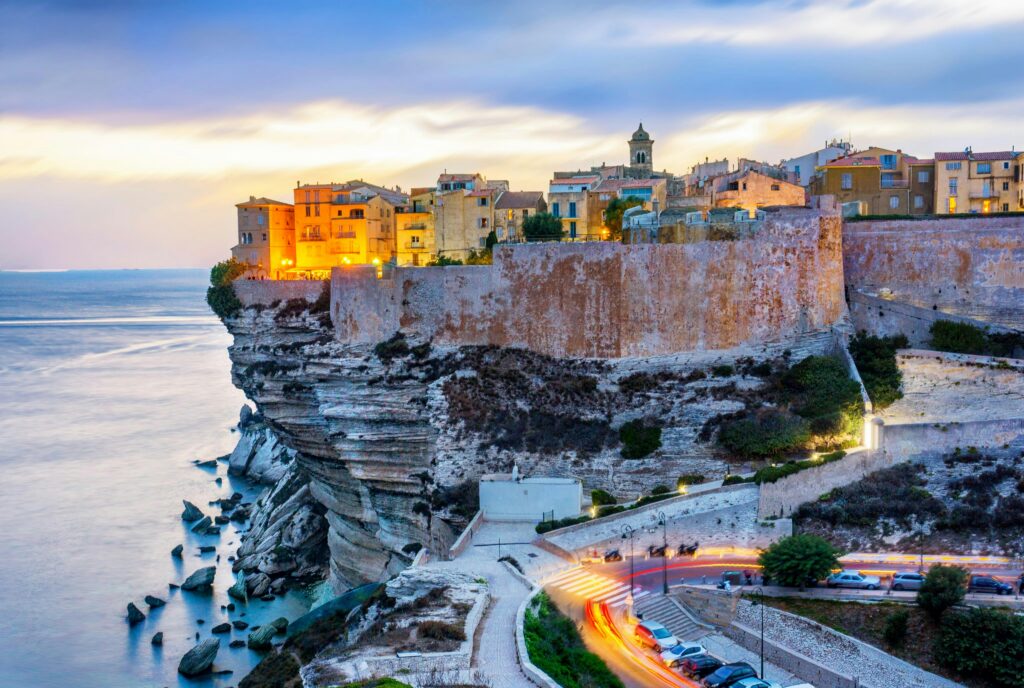
Corsica offers one of the most dramatic combinations of mountains and coastline anywhere in France.
What sets the island apart is contrast. You can spend the morning hiking through granite peaks of the GR20 trail, some of which are considered among Europe’s most challenging long-distance hikes. Afternoons can be spent swimming in turquoise water along the southern coast near Bonifacio or Palombaggia.
The island’s identity is distinct. Its cuisine blends French technique with Italian influence from its neighbor, Sardinia. Its villages feel self-contained and proud. And its pace is less polished than mainland Riviera destinations.
Corsica is one of the best places in France for nature-focused travelers who want flexibility: scenic drives, small harbors, cliffside towns, and protected marine reserves.
Don’t miss: Exploring Bonifacio’s limestone cliffs by boat, where you can see sea caves and dramatic rock formations from the water.
THE FRENCH RIVIERA
Best For: Coastal lovers, stylish travelers, and those who want Mediterranean beauty with cultural depth
Region: Provence-Alpes-Côte d’Azur
The French Riviera offers a different kind of nature experience than Corsica. It’s less wild and more polished, but no less beautiful.
This stretch of Mediterranean coastline runs from Nice to Menton near the Italian border, with small peninsulas and hilltop villages layered in between. The sea is impossibly blue. The light has drawn artists here for generations. And the rhythm of the days naturally orients around water.
Mornings might begin with a walk along the Promenade des Anglais in Nice, followed by a drive up to Èze for panoramic coastal views. Cap Ferrat offers one of the most scenic coastal walking paths in France, looping along cliffs with uninterrupted sea views. From Cannes or Antibes, you can board a small boat for a half-day on the water, anchoring in quiet coves for swimming.
The best time to visit the French Riviera is late May through June and September. It’s warm enough to swim in the sea, but without the density of high summer. July and August bring energy and yacht-filled harbors, while spring and early fall offer a softer, more relaxed Riviera.
While the Riviera is often associated with glamour, it also rewards travelers who want to balance coastal scenery with cultural exploration. You’ll find wonderful museums in Nice, Provençal markets inland, and small medieval villages perched above the coastline.
Don’t miss: The coastal path around Cap Ferrat, followed by lunch overlooking the water in Villefranche-sur-Mer.
Best Places in France For Festive Travel
STRASBOURG
Best for: December travelers and Christmas market enthusiasts
Region: Alsace
Strasbourg is one of the best places to visit in France for the holidays, but it’s compelling year-round thanks to its distinctive Alsatian character.
The city’s half-timbered houses, canals in the Petite France district, and Gothic cathedral create a setting that feels almost cinematic. But what makes Strasbourg particularly interesting is its cultural layering. Sitting on the French-German border, it blends architectural styles, culinary traditions, and even language influences.
In December, its Christmas markets, among the oldest in Europe, fill multiple squares across the city. Each has its own specialty: handcrafted ornaments, regional pastries, mulled wine, or Alsatian ceramics. The atmosphere feels deeply rooted rather than manufactured for tourism.
Outside the holiday season, Strasbourg serves as a gateway to the Alsace Wine Route, where villages like Colmar and Eguisheim offer vineyard views and distinctly different white wine profiles, including Riesling and Gewürztraminer.
Don’t miss: Pairing a Strasbourg stay with a scenic drive along the Alsace Wine Route to explore storybook villages beyond the city.
COLMAR
If Strasbourg feels grand and celebratory, Colmar feels intimate and cinematic.
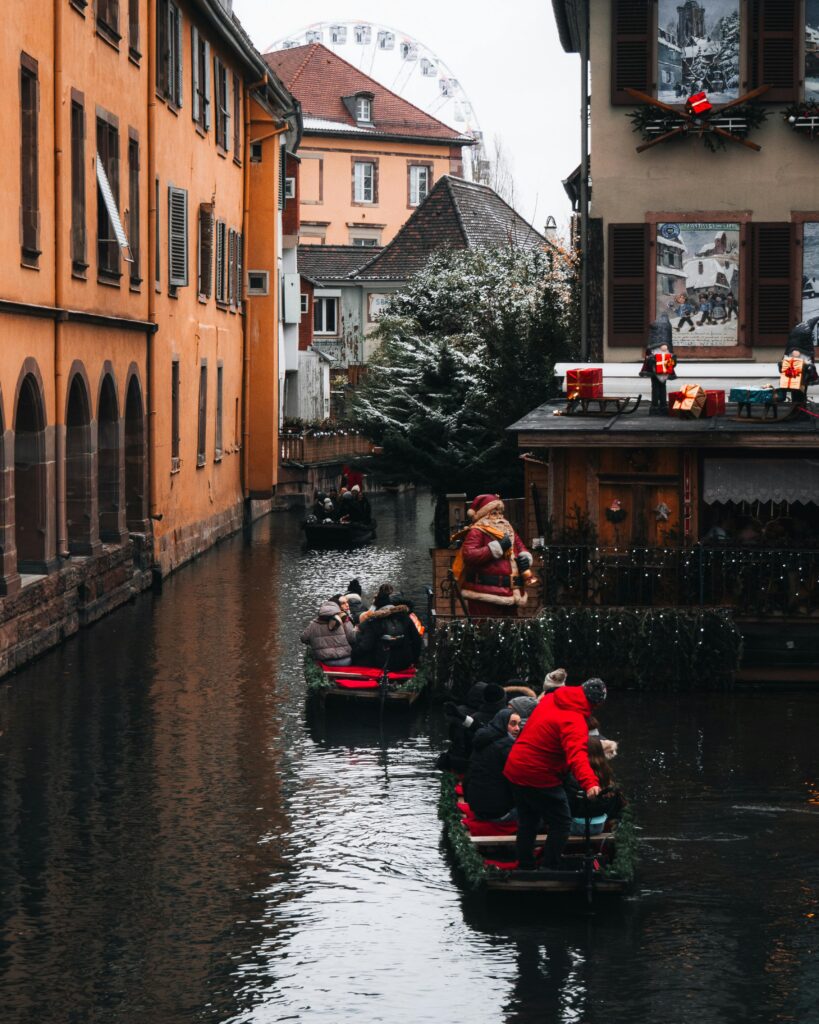
This smaller Alsatian town is often described as one of the most beautiful in France, and in December, it leans fully into that identity. Half-timbered houses glow with string lights. Canal boats drift through the Petite Venise district, decorated with evergreen garlands. Christmas markets are woven through the historic center rather than concentrated in one large square, making the experience feel immersive and walkable.
Colmar’s scale is part of its appeal. You can explore it slowly, moving between market stalls selling handmade ornaments, gingerbread, and regional Alsatian treats. The atmosphere feels layered rather than commercial.
Like Strasbourg, Colmar reflects the cultural blend of France and Germany. This shows up in the food, particularly tarte flambée, spiced wines, and buttery pastries, and also in the architecture.
Outside of December, Colmar serves as an excellent base for exploring the Alsace Wine Route and surrounding villages like Eguisheim and Riquewihr.
Don’t miss: An evening walk through Petite Venise after dark, when the lights reflect across the canal and the crowds thin out.
The Truth: The Best Place To Visit In France is… Everywhere (But Not All At Once).
One of the reasons France rewards repeat visits is because no single itinerary can capture all of it.
You can spend one trip immersed in Provence’s markets and vineyards. Another anchored in Normandy’s history. A third built around alpine air in Chamonix or cycling through the Loire Valley.
France isn’t a destination you “do.” It’s a country you return to, each time structuring the experience around a different rhythm, region, or interest.
Some trips are best built around a single base and deep immersion. Others may combine two complementary regions, like mountains and lake, city and countryside, coast and wine country, to create contrast within one itinerary.
The key is resisting the urge to cover ground and instead choosing the regions that make sense together.
When France is structured well, it feels cohesive rather than crowded. Each day builds naturally on the last. Travel days are thoughtful. The pacing works.
And instead of feeling like you checked boxes, you leave knowing exactly which region you want to explore next.
Ready to Plan Your Trip to France?
Whether this will be your first trip beyond Paris or your third return to the countryside, the structure matters as much as the destination.
Choosing the right regions is only the first step. Deciding how to pair them, where to base yourself, and how to pace your days is what turns a good France trip into one that feels effortless.
If you’d like help shaping that structure, I’d be glad to guide the process. Reach out here to get started.

Be the first to comment